The Dark Fortnight: When Your Period Feels Like a Hijack
Discover the critical line where normal pre-menstrual symptoms cross into PMDD, why you are not crazy, and the exact lifestyle toolkit that stabilized my mind and balanced my hormones.
HEALTH AND WELLNESS
Dian Santos Holman
7/7/20266 min read


A few days before my period, I looked at a pile of unfolded laundry, sat down on the floor, and sobbed like my entire world was ending.
An hour later, that deep sadness turned into an intense, burning rage because my partner breathed too loudly. I felt completely disconnected from myself, like a toxic passenger in my own body. When my period finally arrived, the clouds parted, the sunlight came back, and I was left asking myself the same terrifying question every single month: “Am I actually losing my mind?”
If you have ever felt your personality completely flip like a switch two weeks before your period, please listen to me closely: You are not crazy. You are not broken. And you are definitely not alone.
For years, I told myself to "tough it out" because I thought this was just standard Pre-Menstrual Syndrome (PMS). It wasn't until I truly understood the line between PMS and PMDD, and completely changed how I nourished my body and mind, that I finally got my life back.
Let's unpack what is happening inside your body and how to find your way back to solid ground.
The Line in the Sand: PMS vs. PMDD
Most people throw the term "PMS" around as a catch-all for any mood swing before a period. But Premenstrual Dysphoric Disorder (PMDD) is an entirely different beast. It is a distinct, severe neuroendocrine condition that requires targeted solutions.
What is PMS?
Pre-Menstrual Syndrome is a collection of physical and emotional changes that happen after ovulation.
The Sensation: Mild to moderate irritability, bloating, breast tenderness, fatigue, and temporary food cravings.
The Impact: It is uncomfortable and annoying, but you can still go to work, show up for your relationships, and manage your daily routines.
The Timeline: Symptoms usually appear a few days before your bleeding starts and fade quickly once it begins.
What is PMDD?
Premenstrual Dysphoric Disorder is a severe, debilitating reaction to the normal hormonal fluctuations of your cycle.
The Sensation: Intense, clinical-level depression, overwhelming anxiety, sudden panic attacks, explosive anger, and a complete sense of hopelessness.
The Impact: It actively hijacks your life. It strains marriages, disrupts careers, and makes you feel entirely out of control.
The Timeline: It begins right at ovulation (the "Luteal Phase") and can last for two solid weeks every single month. That means many women spend half their lives fighting their own biology.
The Big Takeaway: PMS lives primarily in the body with some mild emotional shifts. PMDD lives deeply in the brain and nervous system. It occurs because your brain is uniquely hypersensitive to the normal drop in estrogen and progesterone.
Fast-Acting Strategies to Reclaim Your Peace
When you are in the thick of a PMDD or severe PMS flare-up, you cannot wait months for a lifestyle shift to kick in. You need to stabilize your nervous system immediately. Here is what rescued me:
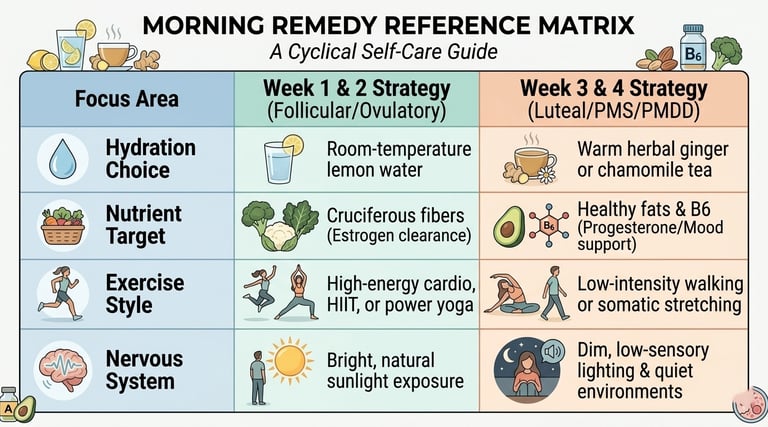
Quick-Reference Relief Matrix
Eliminate Sensory Overload: During PMDD, your nervous system is raw and overstimulated. Turn off the bright overhead lights, put on noise-canceling headphones, cancel optional plans, and let your body rest without guilt.
The Mineral Reset: High-quality magnesium glycinate paired with Vitamin B6 acts as a natural brake fluid for a racing, anxious mind. Vitamin B6 is essential for your body to manufacture serotonin and dopamine—the exact neurotransmitters that plunge during the luteal phase.
Track It to Predict It: The simple act of tracking your cycle gives you your power back. When the dark thoughts creep in, looking at your app and realizing, "Ah, I am on Day 21, this is the hormone drop talking," instantly detaches you from the intensity of the emotion.
Structural Changes to Stop the Monthly Roller Coaster
While immediate fixes are great for survival, true recovery requires addressing the underlying biological stressors. Hormonal health is profoundly tied to how our bodies process inflammation, blood sugar, and gut health.
Targeted Endocrine Nutrition: To help your liver break down and clear out excess estrogen efficiently, flood your diet with cruciferous vegetables like kale, broccoli, and Brussels sprouts. They contain compounds that directly optimize liver detoxification pathways.
Blood Sugar Stabilization: Blood sugar crashes mimic panic attacks and amplify PMS irritability. Pair complex carbohydrates with healthy fats (like avocado, pumpkin seeds, and walnuts) to ensure a slow, steady release of energy that keeps your baseline mood calm and resilient.
Optimize Gut Health: Over 90% of your body's serotonin (the joy molecule) is produced in your gut. Incorporating raw, live plant fibers and fermented foods feeds the specific microbes responsible for neurotransmitter production, building a stronger defense against cyclical mood drops.
Give Yourself Massive Grace
If you are fighting this battle every month, please stop scolding yourself for not being productive, cheerful, or energetic 100% of the time. You are cycling through distinct biological seasons, and your winter phase demands that you slow down.
Your body is not your enemy. The despair and rage you feel during a flare-up are simply chemical signals, not your core identity. By supporting your nervous system, protecting your blood sugar with whole nutrients, and honoring your need for rest, you can smooth out the sharp edges of your cycle.
Take a deep breath. You are going to make it through this month, just like you have made it through every single one before it.
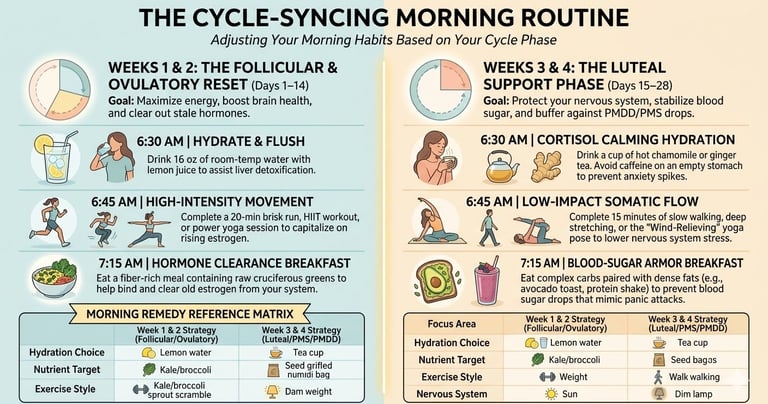
The Cycle-Syncing Morning Routine
Adjust your morning habits based on which phase of your cycle you are currently navigating.
Week 1 & 2: The Follicular & Ovulatory Reset (Days 1–14)
Maximize energy, boost brain health, and clear out stale hormones.
6:30 AM | Hydrate & Flush: Drink 16 ounces of room-temperature water with lemon juice to assist liver detoxification.
6:45 AM | High-Intensity Movement: Complete a 20-minute brisk run, HIIT workout, or power yoga session to capitalize on rising estrogen.
7:15 AM | Hormone Clearance Breakfast: Eat a fiber-rich meal containing raw cruciferous greens (like a kale or broccoli-sprout scramble) to help bind and clear old estrogen from your system.
Week 3 & 4: The Luteal Support Phase (Days 15–28)
Protect your nervous system, stabilize blood sugar, and buffer against PMDD/PMS drops.
6:30 AM | Cortisol Calming Hydration: Drink a cup of hot chamomile or ginger tea. Avoid drinking caffeine on an empty stomach to prevent anxiety spikes.
6:45 AM | Low-Impact Somatic Flow: Complete 15 minutes of slow walking, deep stretching, or the "Wind-Relieving" yoga pose to lower nervous system stress.
7:15 AM | Blood-Sugar Armor Breakfast: Eat complex carbs paired with dense fats (such as avocado toast with pumpkin seeds or a fiber-dense berry protein shake). This stops the blood sugar drops that mimic panic attacks.
Why Evening Cortisol Control Matters
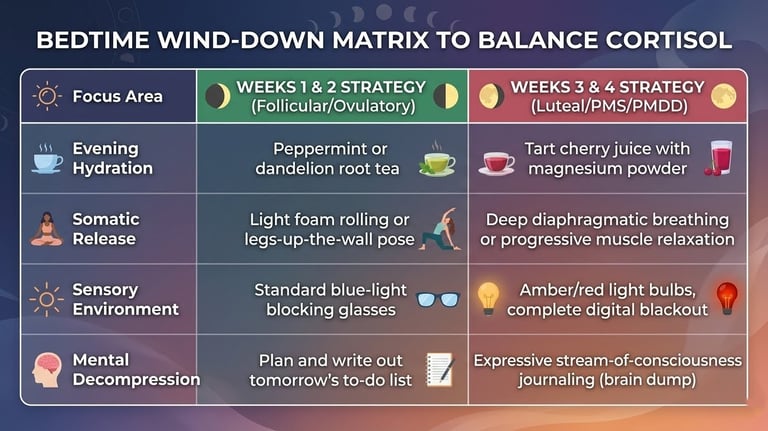
Cortisol (your stress hormone) should naturally drop in the evening to allow melatonin (your sleep hormone) to rise. During your luteal phase (Weeks 3 & 4), hormonal drops can cause evening cortisol spikes, leading to nighttime anxiety, a racing mind, and disrupted sleep. Shifting your bedtime habits balances this curve.
Step-by-Step Evening Execution
Weeks 1 & 2: Maintain & Detoxify
The Drink: Sip dandelion root or peppermint tea to support your liver's natural overnight filtration pathways.
The Movement: Spend 5 minutes with your legs flat up against a wall to reverse blood flow, gently lowering your heart rate.
The Mindset: Your brain has high executive function right now. Write down tomorrow's schedule to clear your mental bandwidth so you can rest soundly.
Weeks 3 & 4: Protect & Decompress
The Drink: Mix a scoop of magnesium glycinate powder into pure tart cherry juice. Tart cherry juice contains natural melatonin precursors, while magnesium glycinate lowers muscle tension and stops racing thoughts.
The Movement: Lie flat on your back in bed. Inhale deeply into your belly for 4 seconds, hold for 7 seconds, and exhale completely through your mouth for 8 seconds. Repeat this cycle 5 times to stimulate your vagus nerve.
The Environment: Switch off all overhead lights 1 hour before bed. Use warm amber lamps or candlelight. This protects your brain from artificial blue light, which triggers cortisol production and destroys your sleep quality when your nervous system is already sensitive.