The Ghost in the Gym Mirror: Why Vague Goals Fail (And the Blueprint that Saves Them)
Setting fitness goals sounds easy, until life gets busy and motivation fades. If you’ve ever started strong only to lose momentum a few weeks later, this blog is for you. Discover how using SMART fitness goals (Specific, Measurable, Achievable, Relevant, and Time-bound) can transform unrealistic expectations into lasting habits. Through relatable experiences, practical examples, and simple mindset shifts, learn how to create fitness goals that fit your real lifestyle and help you stay consistent without chasing perfection. Small changes, realistic plans, and steady progress can lead to results that truly last.
HEALTH AND FITNESS
Dian Santos Homan
6/16/20263 min read


The screech of my 6:00 AM alarm used to signal the start of a daily mental cage match. I would drag myself out of bed, change into running gear, stand in front of my bathroom mirror, and whisper the same hollow mantra: "I just want to get in shape." Three weeks later, burnt out, profoundly frustrated, and deeply disconnected from any measurable progress, I would abandon my gym sneakers entirely. I was working incredibly hard, yet I was going absolutely nowhere because my target was a moving, invisible ghost.
If you have ever sworn to "eat healthier" or "exercise more" only to find yourself back on the couch within a month, your willpower is not the issue. The real culprit is your data structure. True, lasting fitness transformations do not rely on raw emotional motivation; they rely on behavioral psychology and architectural precision. The highly effective framework known as SMART goal setting is the psychological tool that bridges the gap between your best intentions and actual daily behavior.
The Breaking Point: Vague Intentions vs. Concrete Blueprint
My transformation began on a cold Tuesday morning when I looked down at my fitness tracking sheet and realized I had skipped seven workouts in a row. My overarching desire to "feel better" provided zero direction when I was tired, cold, or busy.
The Before: Aimless gym visits, arbitrary exercise selections, constant physical exhaustion, and a complete lack of measurable benchmarks to track.
The After: A highly structured, three-month athletic blueprint featuring objective weekly tracking benchmarks, manageable daily micro-habits, and zero guesswork.
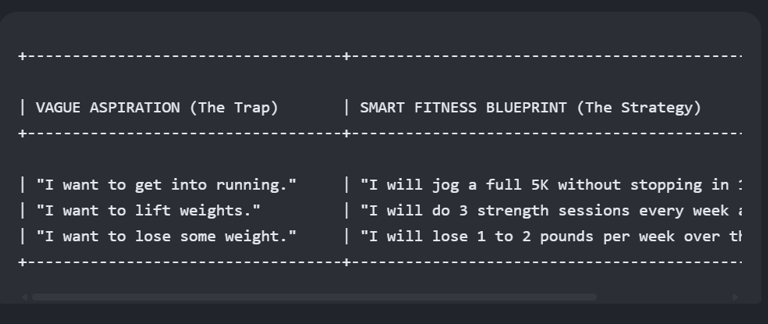
The structural difference was entirely night and day. I stopped chasing a vague feeling of "fitness" and started executing a concrete, mathematical strategy.
Deconstructing the SMART Strategy
To successfully build a bulletproof fitness routine that naturally outlasts your fleeting motivation, your objectives must strictly adhere to the five critical pillars of the National Academy of Sports Medicine (NASM) Guidelines:
Specific: Clearly define the exact physical outcome. Trade "getting stronger" for "completing 10 consecutive bodyweight pull-ups".
Measurable: Establish hard, objective numbers. Track your body composition, repetition counts, or workout durations inside a dedicated training journal.
Achievable: Keep your targets entirely realistic. If you are currently inactive, commit to 30-minute sessions three times a week rather than a grueling two-hour daily routine.
Relevant: Ensure the goal deeply aligns with your personal values. Choose physical activities you actually enjoy to dramatically boost long-term habit consistency.
Time-Bound: Lock in a firm, non-negotiable deadline. According to behavioral science reviews on Healthline, a clear end date creates a healthy sense of urgency.
Vague fitness goals act like a compass without a needle, leaving you completely stranded in a cycle of exhausting effort and zero results.






The Lasting Victory
Twelve weeks after redefining my approach, I wasn't just working out; I was executing a plan. I crossed the finish line of my target 5K with my eyes locked onto the timer, fully aware of every single data point that got me there.
By trading emotional wishful thinking for tactical execution, I managed to rebuild my physical confidence from the ground up. Stop waiting for a random surge of morning inspiration to change your life. Grab a notebook, apply the SMART strategy to your routine today, and explicitly write down exactly what you are going to achieve.