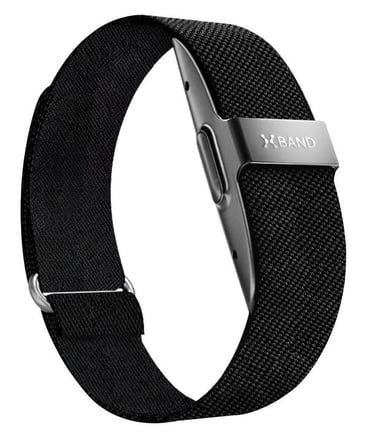
The Hume Health HRV Band – A New Era of Nervous System Awareness for Tech Professionals

The modern tech professional lives in a constant state of context switching—tickets, outages, late‑night deploys, and on‑call rotations. For field engineers and system administrators, stress isn’t an occasional spike; it’s a baseline. The Hume Health HRV Band was built to change that by turning your nervous system into a live data stream you can actually understand and act on.

HEALTH AND FITNESSWEARABLE TECH

3/14/20264 min read

The Hume Health HRV Band – A New Era of Nervous System Awareness for Tech Professionals

The modern tech professional lives in a constant state of context switching; tickets, outages, late‑night deploys, and on‑call rotations. For field engineers and system administrators, stress isn’t an occasional spike; it’s a baseline. The Hume Health HRV Band was built to change that by turning your nervous system into a live data stream you can actually understand and act on.

The story behind Hume Health and the HRV band

Hume Health was founded by a small team of biomedical engineers, data scientists, and former SREs who had lived through the grind of high‑stakes technical work. They saw a gap: most wearables focused on steps and calories, while the real bottleneck for performance was nervous system regulation, how well your body handles stress, recovers, and adapts.

The Hume Health HRV Band was designed specifically around heart rate variability (HRV), one of the most powerful non‑invasive markers of autonomic nervous system balance. Instead of being a general‑purpose smartwatch, it’s a focused, low‑distraction band that continuously tracks HRV, resting heart rate, and micro‑changes in stress load throughout the day and night.

Its mission is simple: give knowledge workers and technical professionals an early warning system for overload, before burnout, brain fog, or health issues show up.

Key features of the Hume Health HRV band
1. Early detection monitoring

The core of the Hume band is its early detection engine. By continuously tracking HRV trends, resting heart rate, and sleep quality, the band flags subtle changes that often precede bigger problems.

  • HRV trend analysis: Instead of focusing on a single HRV number, Hume looks at rolling trends over days and weeks. A sustained drop in HRV combined with rising resting heart rate can indicate mounting stress or insufficient recovery.

  • Recovery readiness score: Each morning, you get a readiness score based on HRV, sleep depth, and overnight heart rate patterns. It’s like a “system health check” for your body.

  • Early overload alerts: When your nervous system shows signs of strain long before you feel “burned out”, the app nudges you with suggestions: lighter training, more sleep, or shorter work sprints.

For tech professionals, this is like having a monitoring dashboard for your own physiology.

2. Nervous system‑aware workday guidance

The Hume band doesn’t just collect data; it translates it into practical guidance for your day.

  • Focus windows: When your HRV and alertness markers are high, Hume suggests ideal windows for deep work, perfect for tackling complex troubleshooting or architecture design.

  • Micro‑recovery prompts: When stress markers climb, the band recommends short breaks, breathing drills, or quick walks to bring your nervous system back toward balance.

  • On‑call and night shift awareness: If your sleep is disrupted by pages or late‑night maintenance, Hume adjusts your readiness expectations and recovery recommendations for the next day.

3. Sleep and recovery analytics

For field engineers and sysadmins, sleep is often fragmented, late changes, early calls, and maintenance windows. Hume tracks:

  • Sleep stages and continuity

  • Overnight HRV and resting heart rate

  • Cumulative sleep debt over the week

The app then translates this into simple language: “You’re carrying two nights of sleep debt, expect lower focus and slower reaction time today unless you prioritize recovery.”

4. Minimalist, work‑friendly design

Unlike flashy smartwatches, the Hume band is intentionally low‑profile:

  • No constant notifications or app overload

  • Comfortable, all‑day wear for keyboard, field work, and travel

  • Battery life designed to last multiple days between charges

It’s built to disappear into your workflow while quietly tracking what matters.

Use cases for field engineers and system administrators
1: On‑call rotations and incident response

For a field engineer or sysadmin on rotating on‑call duty, the Hume band becomes a personal observability tool.

  • Before a heavy on‑call week: You can see if your HRV and recovery are trending strong or if you’re already under‑recovered going in.

  • During incident spikes: If you’ve had multiple late‑night pages, Hume will show the impact on your sleep and HRV, helping you justify lighter loads or recovery time.

  • Post‑incident review: Just like you review system logs, you can review your physiological logs—how did your body respond to that intense week?

This helps you move from “I feel tired” to “I can see I’m under‑recovered and need to adjust.”

Use case 2: High‑stakes maintenance windows

For planned maintenance, windows database migrations, network cutovers, or major upgrades, Hume can help you plan your best performance.

  • Schedule deep work during high‑readiness windows: If your readiness score is high in the morning, you can schedule the most complex tasks then.

  • Avoid stacking stress: If Hume shows multiple days of low HRV, you might choose to delegate, pair up, or reschedule non‑urgent work.

Use case 3: Travel and remote field work

Field engineers often travel between sites, data centers, or client locations.

  • Jet lag and travel stress: Hume tracks how travel impacts your HRV and sleep, helping you adjust your schedule and expectations.

  • Safety and alertness: Low readiness scores can be a signal to avoid stacking long drives, late‑night work, and complex changes on the same day.

Use case 4: Long‑term burnout prevention

Over months, Hume’s trend data can reveal patterns:

  • Weeks where on‑call plus project work always crushes your HRV

  • Times of year where sleep and recovery consistently drop

  • The impact of new habits like walking meetings or earlier bedtimes on your nervous system

For tech professionals who think in dashboards, this is a way to treat your health like a long‑term reliability project.

Take control of your performance and recovery today, start tracking what truly matters with the Hume Health HRV Band.
👉 Hume Health HRV Band:https://amzn.to/414k2hL